How to Choose a Quartz Manufacturer in India: A Complete Buyer’s Guide
Choosing the right quartz manufacturer in India is an important decision for architects, interior designers, fabricators, builders, developers and homeowners.
Quartz surfaces are not simply selected for their colour or appearance. The quality of the finished surface depends on several factors, including raw materials, manufacturing technology, slab dimensions, thickness, colour consistency, quality control, finishing and the manufacturer's ability to maintain the same standards across production batches.
For residential interiors, a small difference in slab quality may be noticeable. For larger projects such as hotels, restaurants, luxury residences, commercial spaces or multi-unit developments, consistency becomes even more important.
This guide explains the key factors to consider when selecting a quartz surface manufacturer in India and how to evaluate whether a manufacturer is suitable for your project.
What Is a Quartz Manufacturer?

A quartz manufacturer is a company involved in the production of engineered quartz slabs using a controlled manufacturing process.
Unlike natural stone, which is extracted from a quarry and processed into slabs, engineered quartz is manufactured by combining selected raw materials with binders, pigments and other components before being compressed, cured, finished and polished.
The manufacturing process can influence:
- Surface consistency
- Slab strength
- Colour uniformity
- Pattern and veining
- Thickness accuracy
- Surface finish
- Stain resistance
- Durability
- Batch-to-batch consistency
- Overall appearance
This is why choosing the right engineered quartz manufacturer matters as much as selecting the right design.
Why the Manufacturer Matters When Buying Quartz
Two quartz slabs may look similar in a catalogue but perform differently in real-world applications.
The difference can come from the manufacturing process, raw materials, machinery, quality-control systems and finishing technology used by the manufacturer.
A reliable manufacturer should be able to provide consistent products rather than depending entirely on individual batches.
For architects and designers, this is particularly important because the selected surface may be specified across multiple areas of the same project.
For example, a hotel project may require quartz for:
- Guestroom vanities
- Reception counters
- Restaurant countertops
- Bar counters
- Table tops
- Common-area surfaces
- Bathroom applications
If the appearance varies significantly between batches, maintaining a consistent design becomes difficult.
A capable quartz slab manufacturer should therefore have systems in place to control production quality from raw material selection through final inspection.
12 Factors to Consider When Choosing a Quartz Manufacturer in India
1. Manufacturing Capability
The first thing to evaluate is whether the company actually has the manufacturing capability required for your project.
Look beyond a product catalogue and understand the company's production infrastructure.
Consider:
- Manufacturing facility
- Production capacity
- Machinery
- Slab formats
- Thickness options
- Finishing capabilities
- Quality-control processes
- Packaging facilities
- Project supply capability
A manufacturer with established production infrastructure may be better positioned to handle larger and repeat requirements.
For architects and project developers, manufacturing capability is especially important when a project requires the same material across multiple spaces or phases.
2. Manufacturing Technology
Technology plays an important role in engineered quartz production.
Modern manufacturing systems can help improve consistency in areas such as:
- Density
- Colour
- Strength
- Surface finish
- Slab dimensions
- Pattern reproduction
One important factor to investigate is the technology used to manufacture the slabs.
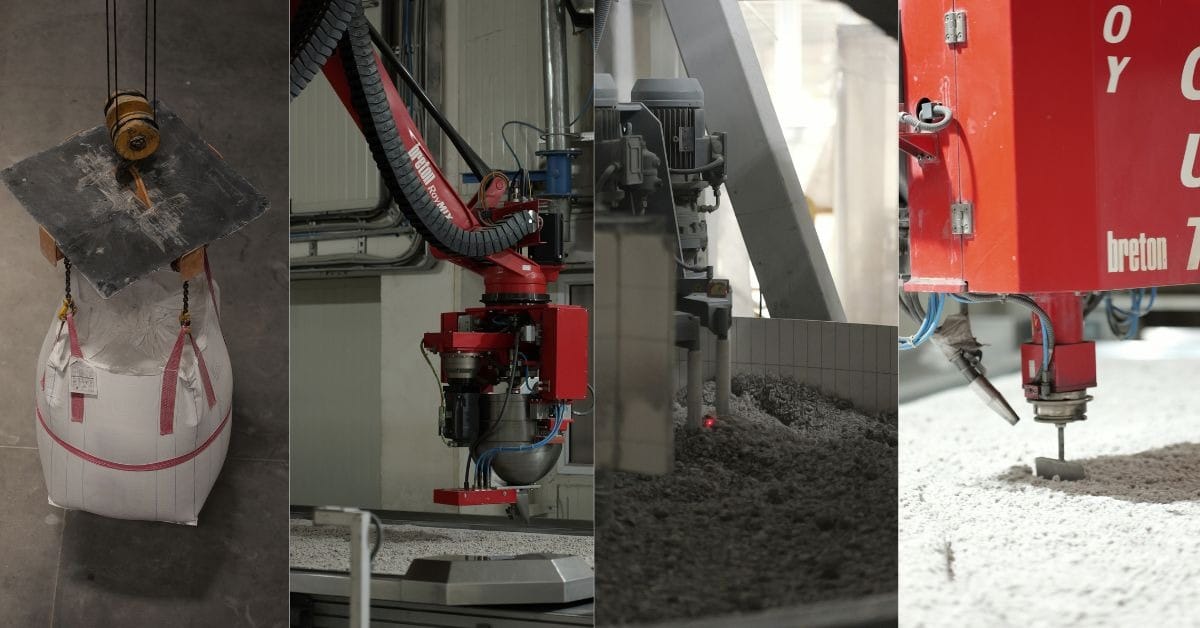
For example, Artizia states that its manufacturing process uses Breton Stone Technology, with Italian precision presses designed to achieve consistency in colour, density and strength.
For buyers, the important point is not simply the name of the technology. It is understanding how the manufacturing technology contributes to the quality and consistency of the finished surface.
3. Slab Size and Format
Slab dimensions can have a major impact on the design and installation of a project.
Larger slabs can help reduce the number of joints and make it easier to achieve a more continuous visual appearance across large surfaces.
When evaluating a manufacturer, check:
- Standard slab dimensions
- Jumbo slab availability
- Maximum slab size
- Thickness options
- Usable slab area
- Availability of larger formats
- Packaging for large slabs
For luxury residential and commercial projects, Jumbo quartz slabs can be particularly useful for large kitchen islands, long countertops, feature surfaces and other applications where minimizing joints is important.
Artizia currently offers Jumbo quartz slabs for residential, hospitality and commercial applications.
4. Thickness Options
Quartz slabs are available in different thicknesses depending on the manufacturer and application.
The appropriate thickness can depend on:
- Application
- Span
- Support structure
- Edge profile
- Installation method
- Project specifications
- Fabrication requirements
A good manufacturer should provide clear technical information regarding available thicknesses and recommended applications.
Architects and fabricators should also consider whether the manufacturer's slab thickness is consistent throughout the product.
Small variations may affect fabrication, installation and edge detailing.
5. Design and Colour Collection
Design is one of the biggest reasons architects and homeowners choose engineered quartz.
Modern quartz collections can replicate a wide range of visual styles, including:
- Pure white surfaces
- Soft neutral tones
- Concrete-inspired finishes
- Marble-inspired designs
- Calacatta-inspired veining
- Bold dramatic patterns
- Subtle linear designs
- Contemporary minimalist surfaces
However, a large catalogue alone does not necessarily indicate manufacturing quality.
When selecting a design, examine the actual slab or physical sample rather than relying entirely on digital images.
Pay attention to:
- Vein direction
- Pattern depth
- Background colour
- Finish
- Repetition
- Visual consistency
- Edge appearance
For premium interiors, the relationship between the surface and the overall architecture is just as important as the technical performance.
6. Slab-to-Slab Consistency
Consistency is one of the most important factors for professional projects.
Imagine specifying the same white quartz surface throughout a large residential development. If one batch has a slightly different background tone or another batch has noticeably different veining, the finished project may appear inconsistent.
A manufacturer should therefore have systems for maintaining consistency between slabs and production batches.
Check for:
- Colour consistency
- Pattern consistency
- Thickness consistency
- Surface finish
- Edge appearance
- Batch control
This becomes particularly important when materials need to be ordered in multiple stages.
7. Quality Control
A professional quartz surface manufacturer should have quality-control procedures throughout the manufacturing process.
Quality control can include inspection of:
Raw Materials
Materials should be evaluated before entering production.
Production
Manufacturing parameters need to be monitored throughout the production process.
Slab Finishing
The finished surface should be checked for defects, polishing quality and uniformity.
Final Inspection
Finished slabs should be inspected before packaging and dispatch.
Artizia states that its Jumbo quartz slabs undergo testing and inspection from raw material selection through precision polishing and final quality inspection.
For project buyers, the objective should be to understand how consistently these processes are applied.
8. Technical Documentation and Certifications
Technical documentation can help architects and project teams make more informed decisions.
Depending on the product and market, useful documentation may include:
- Technical data sheets
- Product specifications
- Test reports
- Certifications
- Warranty documentation
- Maintenance guidelines
- Installation recommendations
- Safety or food-contact certifications where applicable
Do not select a product only because it has an attractive marketing description.
Ask for technical documentation where relevant and make sure the information corresponds to the actual product being specified.
For commercial and hospitality projects, documentation can become particularly important during material approval and specification.
9. Performance of the Surface
A premium quartz surface should be evaluated for performance as well as appearance.
Depending on the product specification, relevant performance characteristics may include:
- Scratch resistance
- Stain resistance
- Heat performance
- Non-porosity
- Surface durability
- Ease of maintenance
- Food-contact suitability
For example, Artizia currently highlights scratch resistance, heat resistance, stain resistance, a non-porous surface, food-contact certification and low maintenance as product characteristics.
The specific technical performance of any quartz product should always be checked against the manufacturer's current technical documentation.
10. Project Support
For architects, interior designers and developers, buying quartz is often more than simply purchasing slabs.
A manufacturer can become an important part of the project workflow.
Useful project support may include:
- Material samples
- Sample boxes
- Product catalogues
- Technical information
- Design assistance
- Slab availability information
- Project coordination
- Fabricator support
- Installation guidance
- Replacement or after-sales support
This can make a significant difference when a project has tight timelines or requires large quantities of a specific surface.
11. Supply and Availability
A beautiful quartz surface is not useful for a project if the required quantity cannot be supplied on time.
Before finalizing a manufacturer, consider:
- Production capacity
- Current stock
- Lead times
- Minimum order requirements
- Repeat-order capability
- Project scheduling
- Domestic distribution
- Export capability
This becomes especially important for large developments where material may be required in phases.
A manufacturer should ideally be able to communicate realistic production and delivery timelines.
12. Packaging and Logistics
Quartz slabs are large, heavy and relatively fragile during transportation.
Packaging therefore plays an important role in protecting the product between the factory and the project site.
Consider whether the manufacturer has appropriate systems for:
- Slab protection
- Edge protection
- Wooden or suitable packing
- Container loading
- Transportation
- Handling
- Identification of slabs
- Project-wise dispatch
Good packaging does not improve the manufacturing quality of a slab, but it can help ensure that the finished product reaches the customer in the condition in which it left the manufacturing facility.
How to Evaluate a Quartz Manufacturer for a Large Project
Large projects require a different level of evaluation compared with individual residential purchases.
Before approving a manufacturer, project teams should consider the following:
Product
- Does the design meet the project's aesthetic requirements?
- Is the slab format suitable?
- Are the required thicknesses available?
- Is the finish appropriate?
Manufacturing
- Does the manufacturer have adequate production capability?
- Is the manufacturing technology clearly explained?
- Are quality-control procedures established?
Consistency
- Can the manufacturer maintain colour and pattern consistency?
- Can future quantities be produced to the required specification?
Documentation
- Are technical specifications available?
- Are certifications and test documents available where required?
- Is warranty information clearly documented?
Supply
- Can the manufacturer meet the project quantity?
- Are lead times realistic?
- Can repeat orders be supported?
Support
- Are samples available?
- Can the manufacturer support architects and designers?
- Is there a dedicated project or sales team?
Engineered Quartz Slabs for Architects and Designers
For architects and interior designers, the selection of a quartz surface should begin with the design intent of the space.
For example, a minimalist kitchen may benefit from a subtle white or neutral surface, while a luxury hospitality project may require a dramatic marble-inspired design.
Engineered quartz allows designers to explore different visual directions while maintaining a manufactured surface with controlled characteristics.
When selecting a surface, consider:
- Overall interior palette
- Cabinet colours
- Flooring
- Lighting
- Joinery
- Hardware
- Wall finishes
- Veining direction
- Slab size
- Fabrication requirements
The slab should work as part of the architecture rather than being treated as an isolated material.
Calacatta Quartz and Marble-Inspired Designs
Calacatta-inspired quartz has become a popular choice for contemporary interiors because of its relationship with luxury marble aesthetics.
These designs typically combine a light background with contrasting or subtle veining.
They can be used for:
- Kitchen countertops
- Islands
- Bathroom vanities
- Wall applications
- Reception counters
- Hospitality interiors
- Table tops
- Feature surfaces
When selecting Calacatta quartz in India, examine the physical slab carefully.
Look at:
- Vein scale
- Vein movement
- Background tone
- Pattern distribution
- Slab-to-slab consistency
- Finish
- Overall visual balance
The objective should be to select a design that complements the architecture rather than simply choosing the most dramatic pattern.
Why Jumbo Quartz Slabs Matter
Jumbo slabs can provide designers with greater flexibility when working with large surfaces.
They can be useful for:
- Large kitchen islands
- Long countertops
- Hospitality counters
- Commercial interiors
- Feature walls
- Large vanities
- High-end residential projects
The primary design advantage is the ability to work with larger continuous surfaces and potentially reduce the number of visible joints.
However, slab size should always be evaluated alongside transportation, handling and fabrication requirements.
Premium Quartz Surfaces: What Actually Makes Them Premium?
The term “premium” should not be based only on price or appearance.
A premium quartz surface should ideally combine several elements:
Design + Manufacturing + Consistency + Performance + Support
A visually attractive slab with inconsistent production may create problems during installation.
Similarly, a technically strong product with limited design options may not satisfy a high-end architectural project.
The best approach is to evaluate the complete product rather than relying on a single feature.
Price vs Value When Selecting Quartz
Price is naturally an important consideration when purchasing quartz.
However, the lowest initial price does not always represent the lowest overall project cost.
Consider the complete value of the product:
- Slab quality
- Usable slab area
- Design consistency
- Fabrication efficiency
- Availability
- Packaging
- Warranty
- Product support
- Replacement availability
- Project coordination
For a large project, even a small issue with material consistency or availability can create additional fabrication and installation costs.
This is why architects and project teams often evaluate value rather than price alone.
Choosing a Quartz Manufacturer for Residential Projects
For a residential project, the selection process can be more design-focused.
Homeowners and designers may prioritize:
- Colour
- Veining
- Finish
- Maintenance
- Durability
- Slab size
- Kitchen compatibility
- Warranty
- Availability
A physical sample is highly recommended before finalizing the material.
Natural and artificial lighting can change how a surface appears, so the sample should ideally be viewed in lighting conditions similar to the final installation.
Choosing a Quartz Manufacturer for Commercial and Hospitality Projects
Commercial and hospitality projects generally require greater attention to consistency and supply.
A project may require hundreds or thousands of square metres of surface material across different areas.
Important considerations include:
- Production capacity
- Batch consistency
- Slab availability
- Technical specifications
- Project scheduling
- Packaging
- Delivery
- Quality control
- Repeat supply
- After-sales support
The manufacturer's ability to support the project throughout its lifecycle can therefore be as important as the initial product selection.
Why Manufacturing Heritage Can Matter
Experience does not automatically guarantee product quality, but established manufacturing experience can provide useful insight into a company's capabilities.
Long-term manufacturing operations may have developed systems around:
- Production
- Raw material sourcing
- Quality control
- Export requirements
- Packaging
- Logistics
- Product development
- Customer support
Artizia is positioned as a premium engineered quartz surface brand from the house of Marudhar and currently states that it has 40+ years of quartz slab manufacturing heritage.
Artizia: Engineered Quartz Surfaces for Modern Projects
Artizia is a premium engineered quartz surface brand from the house of Marudhar, focused on surfaces for architects, designers, fabricators and project developers.
The brand offers Jumbo quartz slabs for luxury residential, hospitality and commercial applications, with a collection spanning pristine white surfaces, contemporary designs and bold veined surfaces.
Artizia's manufacturing approach combines established manufacturing heritage with Breton Stone Technology, which the company says is used to achieve consistency in colour, density and strength.
The brand also states that its products are supported by a 15-year warranty and that its manufacturing facility is located in Jaipur, India.
Its applications include:
- Kitchen countertops
- Bathroom vanities
- Table tops
- Commercial projects
- Hospitality spaces
- Residential interiors
- Architectural projects
For architects and designers looking for premium engineered quartz surfaces, the focus is not simply on selecting a colour. It is about selecting a material that combines design, manufacturing consistency, performance and project support.
Quartz Manufacturer India: A Practical Selection Checklist
Before finalizing a manufacturer, evaluate these areas:
| Factor | What to Check |
|---|---|
| Manufacturing | Production capability and infrastructure |
| Technology | Manufacturing and pressing technology |
| Slab Size | Standard and Jumbo formats |
| Thickness | Available thicknesses and specifications |
| Designs | Range of colours, patterns and finishes |
| Consistency | Slab-to-slab and batch consistency |
| Quality Control | Inspection and testing processes |
| Documentation | Technical data and certifications |
| Performance | Stain, scratch, heat and surface characteristics |
| Samples | Physical samples before approval |
| Supply | Capacity and realistic lead times |
| Packaging | Protection during transportation |
| Warranty | Clear warranty terms |
| Support | Project and technical assistance |
| Experience | Manufacturing history and market presence |
Frequently Asked Questions
What should I look for in a quartz manufacturer in India?
Look at manufacturing capability, technology, slab sizes, quality control, design consistency, technical documentation, supply capacity, packaging, warranty and project support.
What is the difference between engineered quartz and natural stone?
Natural stone is quarried from natural geological formations and then processed into slabs. Engineered quartz is manufactured using controlled production processes and can offer more predictable design and material characteristics.
Are Jumbo quartz slabs better?
Jumbo slabs are not automatically better, but they can provide significant advantages for large surfaces by offering larger usable areas and potentially reducing visible joints.
How do I select a quartz surface for a large project?
Evaluate the product's design, technical specifications, manufacturing consistency, production capacity, slab size, availability, quality control and ability to support repeat orders.
Is Calacatta quartz suitable for kitchens?
Calacatta-inspired engineered quartz is commonly used for kitchen countertops and islands. However, the specific product's technical specifications and recommended applications should always be checked with the manufacturer.
Why is slab consistency important?
Consistency helps maintain a uniform appearance when multiple slabs are used in the same project. This is particularly important for large residential, commercial and hospitality developments.
What makes a quartz surface premium?
A premium quartz surface combines design quality, manufacturing consistency, performance, finishing, reliable supply and professional project support.
Final Thoughts
Choosing a quartz manufacturer in India should go beyond comparing colours and prices.
The right manufacturer should be evaluated across the entire product lifecycle—from manufacturing technology and raw materials to slab consistency, quality control, finishing, packaging, supply and after-sales support.
For architects, designers, fabricators and project developers, these factors become even more important when the same material needs to be used across multiple spaces or project phases.
A well-selected quartz manufacturer can provide more than a surface material. It can provide the consistency, technical confidence and project support required to turn a design specification into a finished space.
For projects where design, performance and consistency matter, the manufacturer behind the slab deserves as much attention as the slab itself.